A fixed-scope MVP at HEZ usually costs between USD 8,000 and 30,000 (about IDR 145–540 million) and takes one to three months. The price comes from three things: how many kinds of users there are, how many screens and flows they need, and how many outside systems it connects to. Below is how we count those, what we cut, and what three real projects took.
The short answer
| Size | Typical scope | Time | Price |
|---|---|---|---|
| Small | 1 user role, 8–12 screens, 1 integration, web only | 4–6 weeks | USD 6,000–12,000 · IDR 110–215 million |
| Medium | 2–3 roles, 15–25 screens, 2–3 integrations (payments, an API, email) | 2–3 months | USD 12,000–25,000 · IDR 215–450 million |
| Large | 3+ roles, web + mobile, data sync or AI, billing | 3–4 months | USD 25,000–45,000 · IDR 450–810 million |
Two products that sound alike can land in different rows. "An app for clinics" is a small project if only patients book. It's a large one if doctors, front desk staff and admins each need their own screens, and it has to send WhatsApp reminders and take payments.
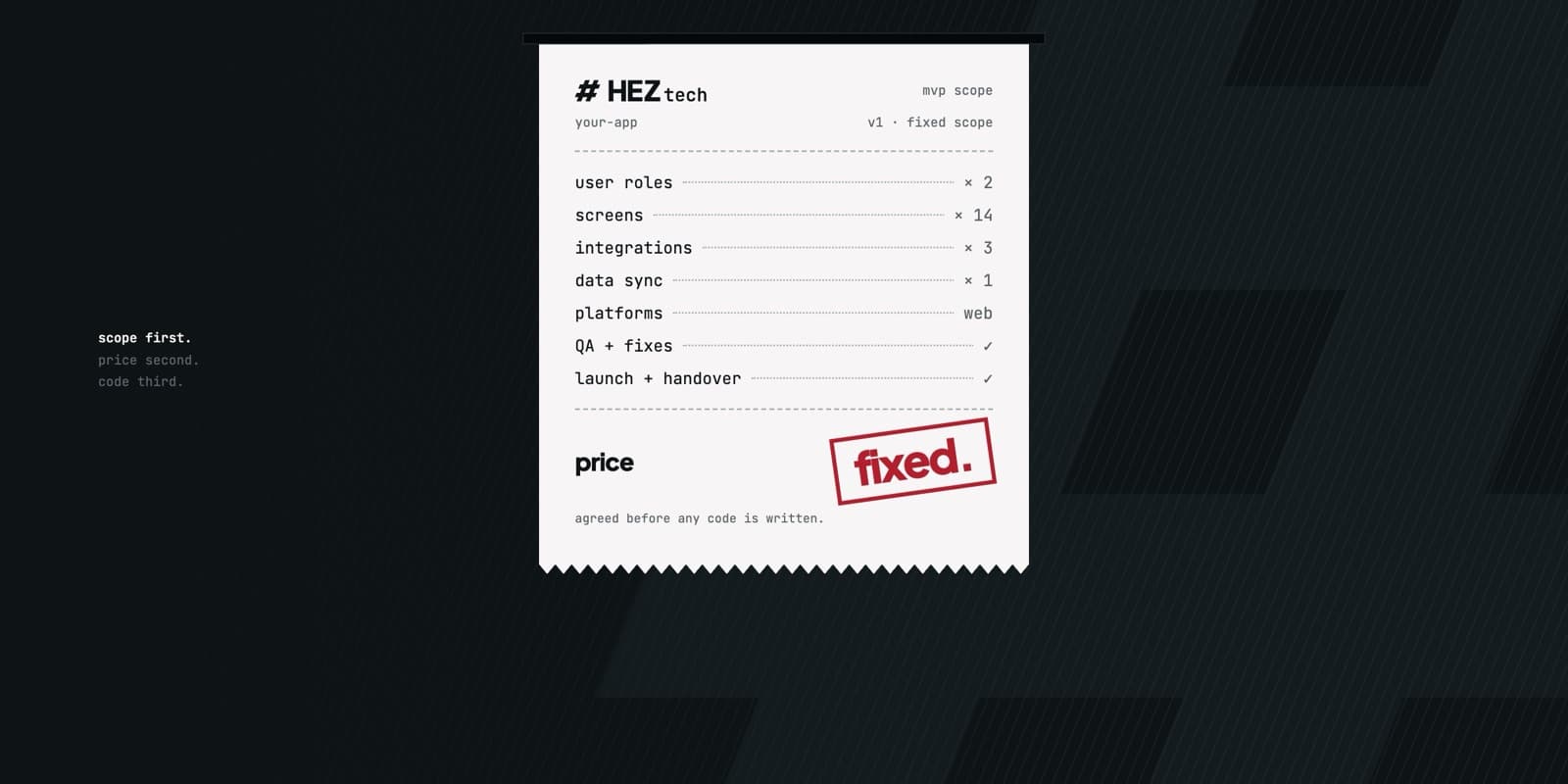
What "fixed scope" means
Before we write any code, we agree on three things in writing: the feature list, the price and the launch date. That's the scope. The price doesn't move unless the scope does.
New ideas will come up during the build. They always do, and many of them are good. They go on a v2 list, or, if you need one before launch, into a written change request with its own price and date. Nothing is added quietly and billed later.
The five things that set the price
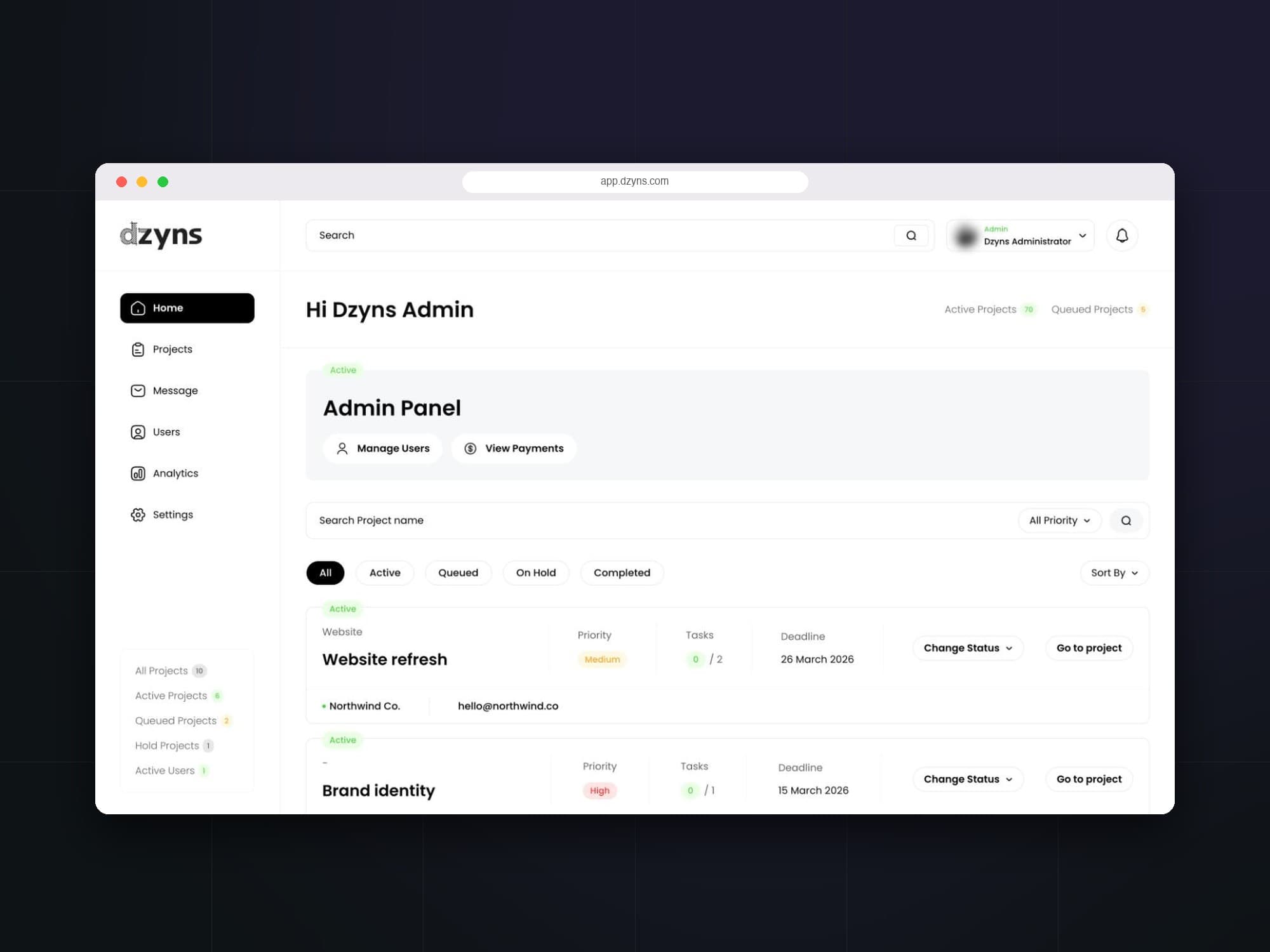
- User roles. Each kind of user needs its own screens, permissions and tests. A shop with only shoppers is one role. Dzyns has clients who pay and send requests, and a team that manages them: two roles, two sides of the product.
- Screens and flows. Count the screens, but count the flows too: sign up, check out, submit a request, refund. A flow that crosses five screens and two roles costs more than five simple pages.
- Integrations. Payments, email, a supplier's API, an AI model. Each one adds setup, error handling and testing against a system we don't control. Dzyns bills through Stripe, Diavaia checks out through Authorize.net, and Party Depot's planner calls a GPT model.
- Data and sync. A form your team fills in is cheap. Copying 1.3 million diamonds from a supplier every 45 minutes, as Diavaia does, and keeping them searchable in 300ms, is a project of its own.
- Platforms. One responsive web app runs on every phone and laptop. Native iOS and Android apps double the screens to build and test, and add app store reviews. Most MVPs don't need them yet.
Three real timelines
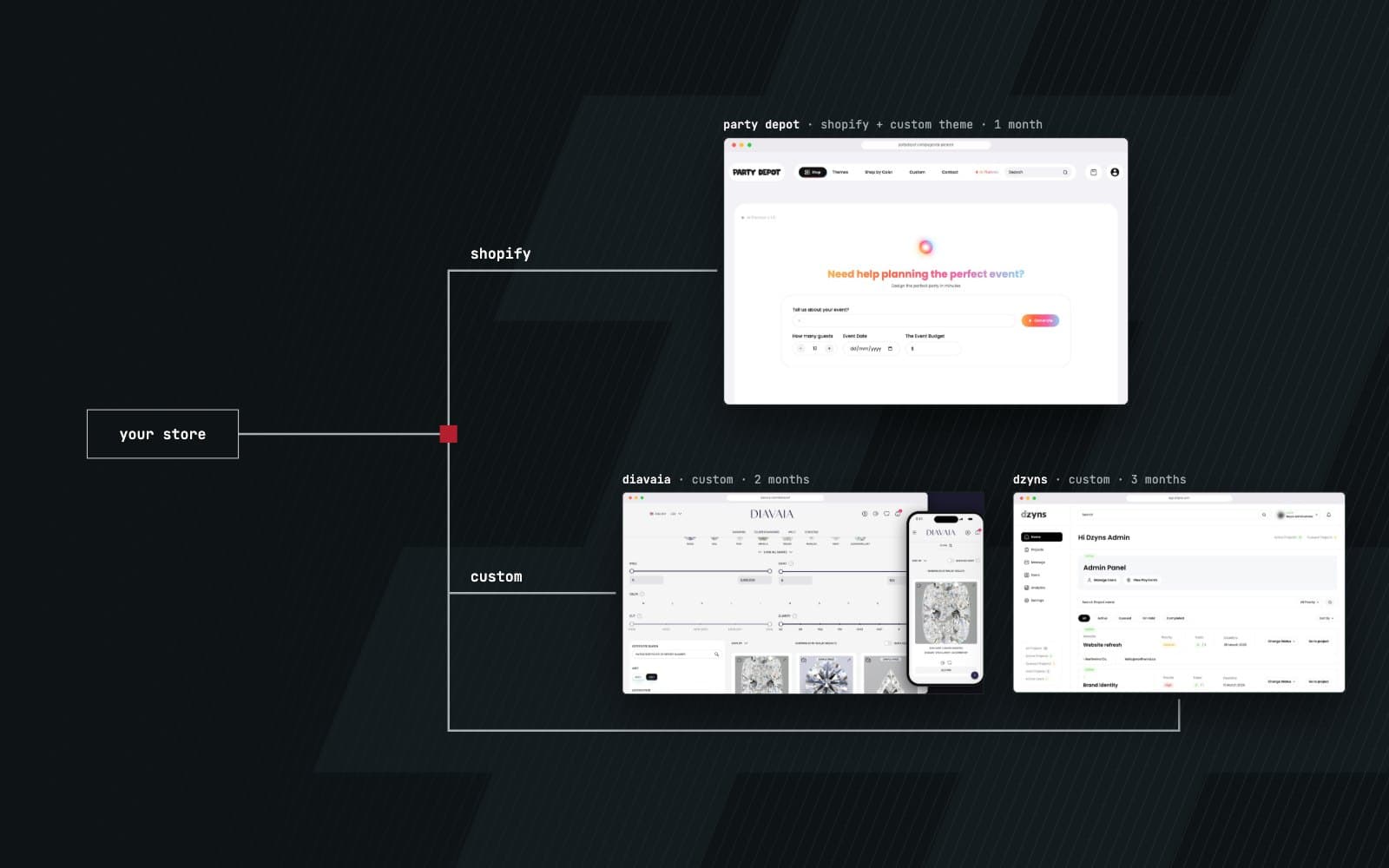
Prices stay private, but timelines don't. Here's what three of our 2025 projects took, from kickoff to launch:
- Party Depot, 1 month. Design, a custom Shopify theme, an AI party planner and a balloon personalizer.
- Diavaia, 2 months. A diamond store with search across 1.3M+ stones, a supplier sync every 45 minutes, a CMS and checkout.
- Dzyns, 3 months. A marketing site, a client app with requests, chat and file delivery, and subscription billing.
Roughly, design takes a fifth to a quarter of the time, the build half or more, and QA plus launch the last week or two. Dzyns took longest because it's two products, a site and an app, sharing one login.
Where the money goes
- Discovery and design, 15%. Workshops, user flows, wireframes and the final UI. This is where scope gets fixed.
- Build, 60%. Front end, back end, integrations and the admin side.
- QA and fixes, 15%. Testing every flow, for every role, on real devices, and fixing what breaks.
- Launch and handover, 10%. Hosting, domains, monitoring, data import, and the handover of code and accounts.
QA is a quarter of the build cost. It's also the easiest line to drop from a quote to make it look cheaper, and the most expensive one to skip: the bugs still get found, just by your customers, after launch.
What we usually cut from an MVP
An MVP has one job: prove that people will use it and pay for it. Everything else can wait for v2.
| Keep | Cut, for now |
|---|---|
| The one flow that makes money | Native iOS and Android apps at the same time |
| Sign-in and payments | Complex permissions and approval chains |
| A basic admin, often a CMS | A custom admin dashboard |
| Error tracking and backups | Multiple languages |
| Analytics events on the key flow | Custom reports and analytics |
Cutting isn't saying no. It's saying "after launch", when real users show you which of those ideas matter.
What it costs after launch
Software needs looking after once it's live. Plan for:
- Hosting, billed at cost: usually USD 20–200 a month, depending on traffic and the database.
- Care plan, USD 150 a month (about IDR 2.7 million): uptime monitoring, security updates, daily backups and up to 2 hours of fixes.
- Growth plan, USD 400 a month (about IDR 7.2 million): everything in Care, plus up to 8 hours of small features or improvements and a monthly report.
Bigger features are quoted the same way as the MVP: as their own fixed scope, with a price and a date.
How to get an accurate quote
You don't need a spec document. Bring three things to the first call:
- Who uses it. List the roles: customer, staff, admin, partner.
- What it must do. The 3–5 flows that have to work on launch day.
- What it connects to. Payments, existing systems, outside APIs, AI.
With those, we can write a scope and a price range within 48 hours.
Frequently asked
A fixed-scope MVP at HEZ usually costs between USD 8,000 and 30,000 and takes one to three months. The price depends on the number of user roles, screens and flows, and integrations.
You know the cost before we start, and we carry the risk of our own estimate. If something takes longer than we planned, that's on us.
Small changes are swapped for something of the same size. Bigger ones get a written change request with a price and a date.
Yes: 40% to start, 30% when the design is approved, and 30% at launch.
You do. When the product launches, we hand over the repository and every account it runs on, if you ask. You can keep working with us or take it to your own team.